Our Approach
The Right Class Makes All the Difference
A child placed in the right class thrives. A child placed in the wrong one struggles — for reasons that have nothing to do with their ability.
Our classes follow a pathway. Teacher Hannah works with the youngest swimmers, children with deep fears, and children who need more attunement. Teacher Kate guides preschool and school-age swimmers through the bridge from fear into real swimming. Teacher Kat teaches pre-swim team and advanced deep-water skills.
Children begin swimming independently around 2½ years old. Before that, parents and caregivers are in the water with them.
href="mailto:support@heldinwaters.com?subject=Need%20Help%20Choosing%20My%20Child%27s%20Class" style="display: inline-block; background: #305B7C; color: white; text-decoration: none; border-radius: 8px; padding: 14px 28px; font-size: clamp(12px, 1vw, 14px); font-weight: 600; letter-spacing: 0.08em; text-transform: uppercase;" > Need help choosing a class?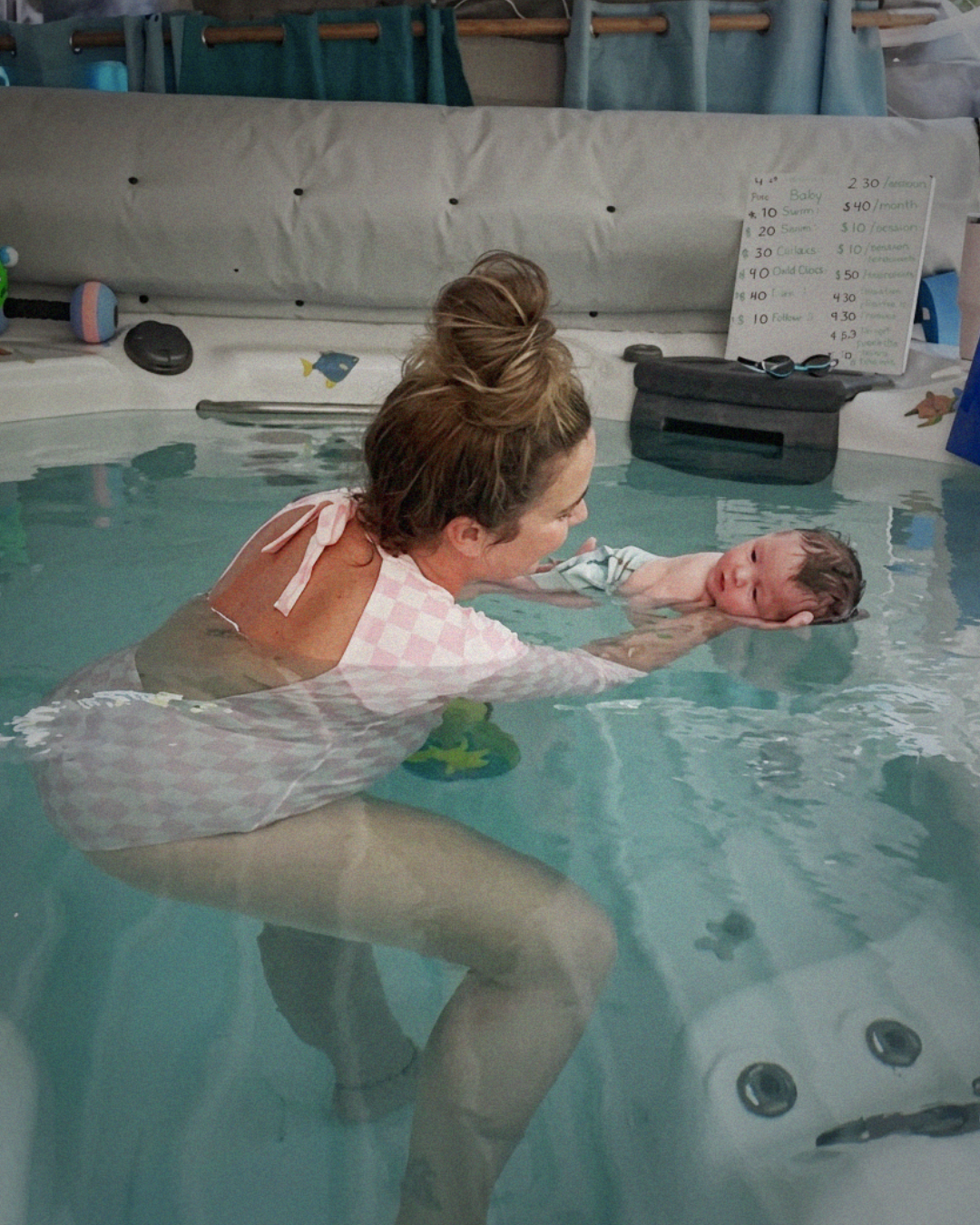
Choose a Session
Find the perfect program for your swimmer — from first splashes to race-ready skills.
Session 1 (July 7 - July 23)
Early summer swim lessons for babies, toddlers, and young swimmers.
View Session 1 ScheduleSession 2 (July 28 - August 13)
Late summer swim lessons continuing skill development.
View Session 2 ScheduleWednesday Therapy Pool (July 15 - August 19)
Private and semi-private therapy pool sessions with Hannah for infants through 3-year-olds and children needing extra support.
View Wednesday ClassesPre-Swim Team
Session 1: July 7 - July 23
Session 2: July 28 - August 13
For strong swimmers ready to develop advanced skills and swim team preparation.
View Pre-Swim TeamDrop-In Classes
For families and swimmers who've already completed a session with us.
Request a drop-in for Parent & Baby or Pre-Swim Team and keep building on what you've already started. Drop-ins are staff-confirmed, available Tuesdays and Thursdays only, and must be booked in sets of at least 2.
Parent & Baby Classes
For families who've completed a Child & Adult class. Tues & Thurs, four time slots available.
$40/class · 2-class min ($80)Pre-Swim Team
For swimmers who've completed a full session. Tues & Thurs, 2:30 PM or 4:00 PM.
$42/class · 2-class min ($84)Our Program
Your Child's Swim Pathway
Baby & Toddler Classes
Parent in water
Focus on water comfort, trust, breath cues, buoyancy, and playful exploration through connection and safety.
Therapy Pool Support
Individual pace
A slower, supportive environment for emotional safety, sensory needs, and confidence-building in water.
Beginner Swimmers
Independent
Children begin independent swimming without a caregiver. Focus on confidence, safety, and comfort in water.
Intermediate Swimmers
Skill building
Developing coordination, breath control, and foundational technique with growing independence.
Pre-Swim Team
Advanced skills
Refining technique including breath control, diving, endurance, and all four strokes.
Questions, answered
Everything you need to know before you arrive. If something isn't here, just reach out.
Start with your child's comfort in water, not age alone. If you're unsure, the Baby & Toddler or Beginner pathway is usually the best starting point, and guidance can always be provided.
A supportive pathway for children who need a slower pace, emotional safety, or sensory support. It is not a level of progression but a support-based experience.
No. Confidence is built in the water. Each class is designed to meet the child exactly where they are.
Yes. Caregivers are in the water for baby and toddler classes. You are your child's anchor and foundation of safety.
Floaties create artificial body positioning that removes real water awareness. The focus is on building natural balance, trust, and body understanding in water.
Fear is welcome. Nothing is forced. The approach is slow, responsive, and focused on building trust first.
Swimwear, towel, and comfort items if needed. A reusable swim nappy is required for younger children.
The focus is connection first. Children are supported through trust, regulation, and relationship with water — not just technique.
Still have a question? Get in touch — we're happy to help.